
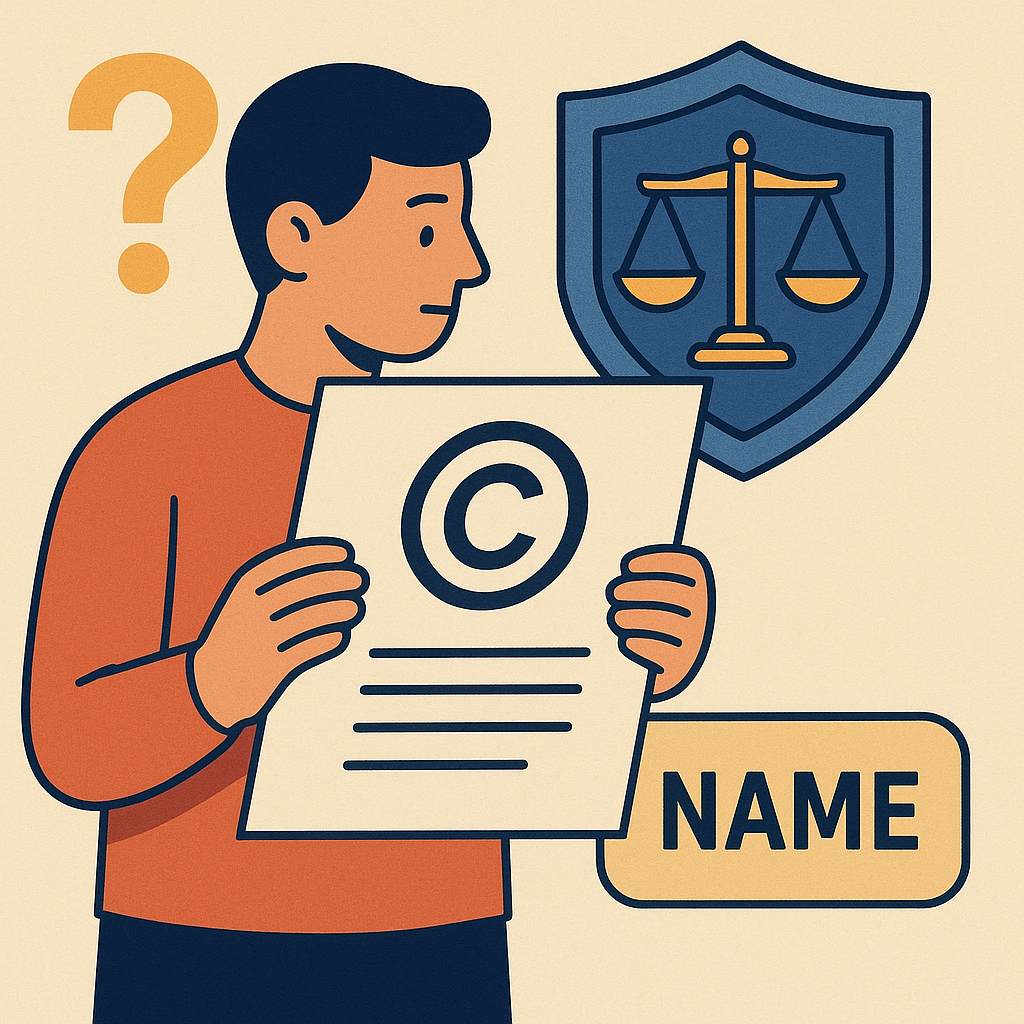
Your name is part of your identity. You’ve built it, marketed it, and made it synonymous with your work. So the question feels natural: Can you copyright your name? The answer is more nuanced than a simple yes or no. While copyright law doesn’t directly protect names the way it protects creative works, your personal brand and the name you’ve built deserve real legal protection. Understanding the distinction—and knowing what tools actually work—matters for creators, artists, entrepreneurs, and small business owners who rely on their reputation.
In this guide, we’ll explore what copyright actually covers, why your name falls into a different legal category, and what protection strategies actually work for creators serious about safeguarding their identity and brand.
What Copyright Actually Protects (And What It Doesn’t)
Copyright law protects original works of authorship—things like books, music, artwork, software, and photographs. The moment you create something original and fix it in a tangible medium, copyright attaches automatically. No registration, no fee, no government approval required.
But here’s the critical part: Copyright protects the work itself, not the name attached to it.
Your name—whether it’s your legal name, pen name, stage name, or artist moniker—is not a work of authorship. It’s an identifier. It’s who you are. Copyright simply doesn’t apply to identifiers the way it applies to creative expression.
Why Names Fall Outside Copyright
Copyright exists to encourage creativity by protecting the expression of ideas. Your name isn’t an expression of an idea—it’s a label. Copyright law treats it differently than it treats your novel, your song, or your painting. That’s why you can’t “copyright” your name in the traditional sense.
But that doesn’t mean your name is unprotected. It just means you need different legal tools.
What Actually Protects Your Name: Trademark and Brand Law
The real legal framework for protecting your name is trademark law, not copyright. Trademarks protect words, symbols, phrases, and logos that identify the source of goods or services. If you use your name to brand your work—your art, your music, your business—trademark law is your stronger ally.
Here’s why this matters: A trademark registration with the U.S. Patent and Trademark Office (USPTO) gives you nationwide rights to use that name in connection with your specific goods or services. It creates a legal record. It allows you to pursue infringement claims if someone else tries to profit from your name or create confusion in the marketplace.
How Trademark Registration Works for Creators
You can register your name as a trademark if you use it to identify your creative work or services. A musician can trademark their stage name. An artist can trademark their artist name. A consultant can trademark their business name. The registration process costs money and takes time, but it creates federal protection that copyright simply doesn’t offer for names.
Unregistered Trademark Rights
You don’t need federal registration to have some trademark protection. The moment you use your name in commerce to brand your work, you gain common law trademark rights in the geographic area where you operate. But federal registration is stronger, more enforceable, and gives you more legal options if someone infringes.
Protecting Your Creative Works—Where Copyright Matters
While your name itself isn’t copyrightable, the work you create under that name absolutely is. Your paintings, your written articles, your music, your designs—these are all protected by copyright the moment you create them.
The real challenge isn’t ownership. Copyright exists automatically. The challenge is proof. If someone steals your work or claims they created it first, you need evidence that you made it and when.
This is where dated, notarized documentation becomes essential. A timestamped record of your authorship—paired with third-party notarization—creates litigation-resistant evidence. It’s not a substitute for federal copyright registration (which you’ll still need if you want to sue in federal court), but it’s a powerful complement to it.
Copyright Registration vs. Notarized Evidence
Federal copyright registration with the U.S. Copyright Office is the gold standard for legal protection. It’s required before you can file an infringement lawsuit. But registration takes time and costs money. A notarized certificate of authorship, by contrast, creates immediate, affordable dated evidence of your work and your claim to it. Both serve different purposes. Both matter.
Real-World Example: An Illustrator’s Dilemma
Imagine you’re an illustrator building a reputation under your name. You create original artwork and post it online. Someone copies your style, uses a similar name, and sells prints claiming they’re the original artist. What protects you?
Copyright protects your actual artwork—the specific illustrations you created. Your name itself? That’s where trademark law steps in. If the person is using a confusingly similar name in a way that misleads customers, you have grounds for a trademark claim.
But here’s the practical reality: You need to prove when you created your work and that it’s genuinely yours. A dated, notarized record of your illustrations—timestamped at creation—gives you evidence that holds up. Combined with federal copyright registration and trademark protection for your name, you have a comprehensive defense.
What You Should Actually Do to Protect Your Name and Work
Protecting your creative identity requires a layered approach:
- Use your name consistently in branding your work and services
- Create dated evidence of your authorship through notarized documentation
- Register copyrights federally for your most important works
- Consider trademark registration if your name is central to your brand
- Document your process—keep drafts, sketches, and work-in-progress files with timestamps
- Use copyright notices on your work to signal ownership to the public
Each layer reinforces the others. Together, they create a strong, defensible position if a dispute ever arises.
Conclusion: Your Name Deserves Protection—The Right Way
You can’t copyright your name in the technical sense, but that doesn’t mean it’s unprotected. Trademark law, notarized documentation, and federal copyright registration work together to safeguard both your identity and your creative work.
The key is understanding which tool serves which purpose. Your name needs trademark and brand protection. Your creative works need copyright and dated evidence of authorship. Both matter for creators serious about their reputation.
If you’re building a brand or creating original work, start by creating a timestamped, notarized record of your authorship. It’s affordable, fast, and creates the kind of dated evidence that stands up if you ever need to prove your work is yours. Then layer in federal copyright registration and trademark protection as your brand grows.
Ready to protect your creative work? Start with a notarized certificate of authorship today. It’s the foundation of evidentiary protection that works alongside—and strengthens—your other legal protections.