

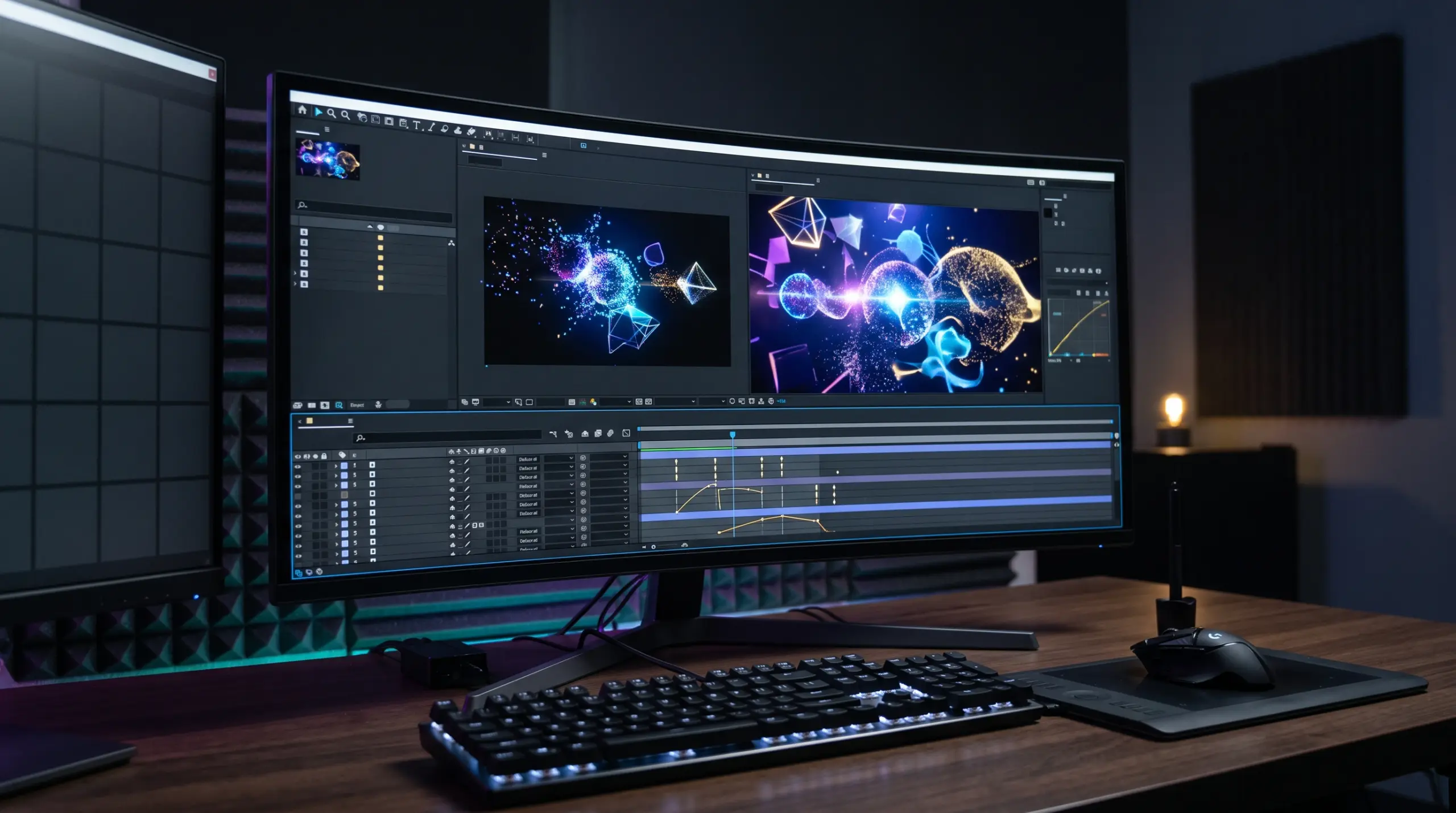
Motion graphics can take days or weeks to design, animate, revise, and render. Yet once a finished video appears online, it may be copied, reposted, altered, or presented as someone else’s work in seconds. That is why copyright protection for motion graphics involves more than simply keeping a project file on your computer. You also need a clear record showing what you created, when you created it, and how the final work developed from your original materials.
This guide explains how copyright applies to animated graphics, visual effects, title sequences, explainer videos, and other digital motion work. You will learn what copyright protects, which files can help prove authorship, how to document collaborative projects, and where notarized evidence fits alongside registration with the U.S. Copyright Office. The goal is practical: to help animators and creative businesses build an organized evidence trail before a dispute occurs.
Motion Graphics Copyright Begins When You Create the Work
Motion graphics copyright generally begins automatically when an original work is created and fixed in a tangible medium. In practical terms, that can include saving an animation project, exporting a video file, recording a rendered sequence, or storing original artwork and design elements in a digital file. You do not need to wait for a certificate or government approval for copyright ownership to exist.
Copyright may protect original creative expression such as illustrations, character designs, title treatments, original visual compositions, animation timing, transitions, and the selection and arrangement of visual elements. It may also protect an audiovisual production as a whole when the work contains sufficient original expression.
However, copyright does not protect every aspect of a motion project. General ideas, concepts, styles, methods, software functions, and familiar visual techniques may not qualify for protection by themselves. For example, an idea for “a logo flying through a futuristic city” is not the same as the particular artwork, animation, camera movement, lighting, and editing used to express that idea.
Separate your original work from third-party material
A finished animation may contain assets from several sources. Some may be your original work, while others may come from a stock library, client, contractor, font license, plugin, or public domain collection. Copyright protection applies differently to each component, so maintain records showing what you created and what you licensed.
- Save license agreements and receipts for stock footage, music, fonts, templates, and 3D models.
- Identify which elements were supplied by a client or another contractor.
- Keep notes about substantial original changes you made to licensed or pre-existing assets.
- Do not claim ownership of materials that your agreement does not assign to you.
These distinctions matter because a dispute may involve only one component of a larger video. Clear documentation helps establish the scope of your rights instead of leaving the entire project’s ownership unclear.
What Evidence Helps Prove Animation Copyright Protection?
When someone challenges your ownership, the important question is often not whether you possess a final MP4 file. It is whether you can show a credible history of creation. A strong record connects you to the work through multiple forms of evidence, including source files, drafts, correspondence, metadata, contracts, and dated exports.
Preserve the creative development process
Project files can be particularly useful because they may reveal layers, compositions, keyframes, timelines, masks, effects, and other decisions that are difficult for someone else to recreate. Save more than the final render. Preserve storyboards, style frames, sketches, animatics, work-in-progress exports, draft scripts, and revision notes.
Use consistent file names and retain versions rather than overwriting everything with a single file. For example, a useful system might include the project name, version number, and date. Cloud storage history, repository commits, email attachments, and client review platforms may also help establish when particular stages existed.
Metadata can support your timeline, but it should not be your only evidence. File dates can change when files are copied, transferred, or exported. A persuasive authorship record usually combines technical information with independent records and clear explanations of the creative process.
Document ownership and collaboration
Animation projects often involve designers, compositors, sound artists, editors, producers, and clients. Before work begins, use a written agreement that addresses ownership, licenses, payment, revisions, portfolio rights, and the delivery of source files. Without clear terms, parties may later disagree about whether the work was commissioned, assigned, licensed, or jointly created.
Keep signed contracts, invoices, approval emails, and project briefs with your production records. If a freelancer contributes original material, document whether the contribution is assigned to the client, licensed for a defined purpose, or retained by the freelancer. These records support visual effects ownership claims by showing who supplied each element and what permissions were granted.
How to Build a Dated, Witnessed Record of Authorship
Ordinary project files can help prove authorship, but creators may want a more deliberate record made close to the time of creation. Copyrightrecords.com provides a copyright certificate paired with notarization for this purpose. The service is designed to create dated evidence of a creator’s claim that they made a particular work at a specific point in time.
The central distinction is important: copyright exists automatically when you create an original work. A certificate does not create ownership, and notarization is not federal copyright registration. Instead, the record helps address the practical problem of proving when the work existed and that you claimed authorship before a competing claim or unauthorized use arose.
Why notarization can strengthen the record
A basic digital timestamp may show that a file or statement existed on a particular date, but it may leave questions about how the record was created or whether it was changed later. Notarization adds an independent third party who confirms the relevant execution or acknowledgment according to the applicable notarization process. That witnessed element can make the evidence harder to dismiss than an unsupported personal assertion.
Copyrightrecords.com operates through a church-based unincorporated association and provides documentation and notarization services for creators, small businesses, and individuals. The recordkeeping service is not a government filing and should not be described as an official registration. It is evidentiary documentation intended to work alongside other records, including contracts, source files, and federal registration.
For a motion designer, the documented submission might include a final animation, selected source materials, a project description, authorship information, or a representative package of files. Keep your own secure copies and preserve the production history that explains how the submitted work was created.
Protecting Motion Graphics Before and After Publication
Good documentation is most effective when it begins before a project becomes public. Once an animation is posted online, screenshots and reposts can help show unauthorized use, but they may not establish the full creation timeline. A repeatable workflow gives you stronger evidence and makes disputes easier to manage.
A practical documentation workflow
- Start with a project brief. Record the client, creator, project name, intended use, and date work began.
- Save original materials. Preserve sketches, illustrations, audio notes, scripts, style frames, and source compositions.
- Use version control. Keep dated iterations rather than deleting earlier drafts.
- Track outside assets. Store licenses, receipts, permissions, and attribution requirements.
- Confirm contractual terms. Clarify assignments, licenses, approvals, and source-file delivery in writing.
- Create a formal evidence record. Consider a dated certificate and notarization for important or high-value work.
- Monitor publication. Save links, screenshots, platform notices, and dates when the work appears online.
This process supports copyright for animators working independently or as part of a studio. It also helps when a client asks for a revision, a platform removes content, or a third party claims that your animation copied theirs. The more clearly you can explain the project’s timeline, the easier it may be to identify the actual dispute.
What to do if your animation is copied
First, preserve evidence of the suspected infringement. Save the URL, screenshots, downloaded copies where lawful, publication dates, account information, and comparisons between your original work and the allegedly copied version. Do not alter your original files after discovering the dispute; preserve them in their existing state and work from copies when possible.
Next, review your contracts and licenses. Determine whether you own the relevant rights, whether another party has an exclusive license, and whether the allegedly copied element came from a third-party library. Depending on the circumstances, you may consider a platform complaint, a formal demand, negotiation, or advice from a qualified copyright attorney.
Copyright Registration Still Matters for Federal Enforcement
A certificate and notarized record can support digital animation proof of authorship, but they do not replace registration with the U.S. Copyright Office. Under 17 U.S.C. §411(a), and as confirmed by the Supreme Court in Fourth Estate Public Benefit Corp. v. Wall-Street.com (2019), a copyright owner generally must have completed registration—or received an appropriate refusal—before filing a federal copyright infringement lawsuit.
Registration also matters for eligibility for statutory damages and attorney’s fees. Those remedies are connected to the timing and status of U.S. Copyright Office registration, not to a private certificate or notarization. Therefore, creators should not rely on a notarized record as a substitute for timely federal registration, particularly when a project has significant commercial value or is likely to be distributed publicly.
The two forms of documentation serve different purposes:
- Automatic copyright: establishes ownership in original expression when it is created and fixed.
- Certificate and notarization: creates dated, witnessed evidence supporting your authorship claim.
- U.S. Copyright Office registration: provides the federal registration needed for important enforcement options, including filing a federal infringement lawsuit and potentially seeking statutory damages and attorney’s fees when statutory requirements are met.
Because copyright disputes can involve deadlines, contracts, fair use, work made for hire, joint authorship, and international issues, consult a qualified attorney for legal advice about your particular situation. Copyrightrecords.com is a documentation and notarization service, not a law firm or the U.S. Copyright Office.
Conclusion: Make Your Animation Ownership Easier to Prove
Copyright protection for motion graphics starts automatically, but ownership can become difficult to demonstrate when files are scattered, collaborators are undocumented, or a competing claimant appears with an earlier-looking record. Preserve your source files, maintain dated versions, document licenses and contracts, and record the development of your animation from concept through final export.
For important work, a copyright certificate paired with notarization can add dated, witnessed evidence of authorship. It is designed to work alongside your production records and, when appropriate, registration with the U.S. Copyright Office—not instead of registration. If you ever need to pursue federal infringement claims or seek statutory damages, federal registration requirements still apply. Build your evidence early, keep it organized, and make your creative ownership easier to establish when it matters most.









