

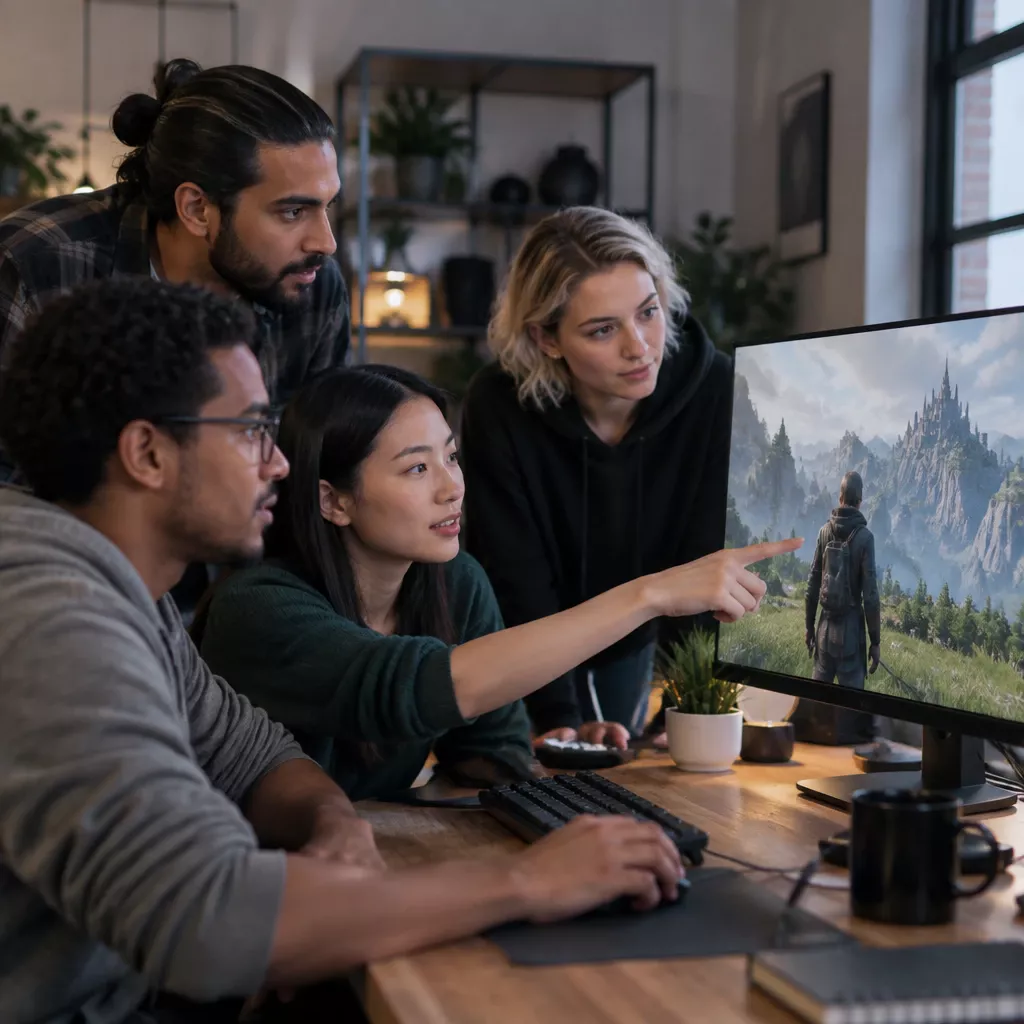
Copyright protection for video game mods begins with understanding what you created, what belongs to the game developer, and how you can prove your contribution. A new character model, questline, texture pack, sound effect, map, script, or gameplay system may represent hours of original work. However, a mod often exists within someone else’s game, which makes ownership and enforcement more complicated than it first appears.
This guide explains how copyright applies to custom game content, how derivative work copyright affects mod creators, and what evidence can help establish authorship. You will also learn why project files, version history, publication records, license terms, and independent notarized documentation can matter if your work is copied or disputed. Copyrightrecords.com provides dated, witnessed evidence of authorship, but it does not replace registration with the U.S. Copyright Office or provide legal advice.
Copyright Protection for Video Game Mods: What Can You Own?
Copyright generally exists automatically when an original work is fixed in a tangible form. For a mod creator, that may happen when you save a finished 3D model, write source code, record original music, design a map, or create a written storyline. You do not need to publish the mod before copyright exists.
That does not mean every part of a mod is owned by the modder. The original game, including its code, characters, artwork, music, trademarks, and worldbuilding, usually belongs to the game publisher or another rights holder. Your rights generally apply only to the original expression you contributed, subject to the game’s license agreement and other applicable legal restrictions.
Original contributions versus game assets
Consider a mod that adds a new playable character. Your original dialogue, custom animations, character model, textures, and programming may contain protectable expression. The game engine, existing characters, proprietary tools, and copied assets may remain controlled by the publisher. If your character incorporates substantial protected elements from the game, the legal analysis becomes more complicated.
This is why video game mod ownership should be documented at the level of individual contributions. Keep a clear record of:
- Which assets you created from scratch;
- Which game files or assets you modified;
- Which third-party materials you used;
- What permissions or licenses covered those materials; and
- What the game’s end-user license agreement permits.
Copyright protects original expression, not a general idea. An idea for a survival mode, fantasy weapon, or alternate storyline may not be protected by itself. The specific code, writing, artwork, audio, and design implementation may be protectable if sufficiently original.
Why derivative work copyright matters
A mod is often considered a type of derivative work because it is based on, or designed to work with, an existing game. A derivative work can contain new, protectable expression, but the rights in that new material do not automatically give the creator unlimited permission to exploit the underlying work.
In practical terms, you may own original portions of a mod while still needing authorization to distribute the complete mod. The publisher’s policies, modding tools, workshop rules, and license terms can determine whether commercial distribution, monetization, public hosting, or certain types of modification are allowed. Read those terms before releasing or selling custom game content.
How to Prove Your Custom Game Content Is Yours
The central problem for many creators is not whether copyright arose. It is proving when the work was created, what the creator contributed, and whether a copied version came from the creator’s files. Strong documentation connects your identity to specific creative material over time.
Build an authorship trail while you work
Do not wait until a dispute occurs to gather evidence. Maintain organized project records throughout development. A useful evidence trail may include:
- Original source files: Preserve editable project files, scripts, layered artwork, 3D models, audio sessions, and design documents.
- Version history: Use reliable backups, file histories, repository commits, or dated milestones that show development over time.
- Creation notes: Record when you began the project, what decisions you made, and which portions were independently created.
- Collaborator agreements: Put ownership, licenses, credit, and payment terms in writing before other people contribute.
- Release records: Save upload confirmations, publication dates, changelogs, and links to the original release.
- Permission records: Keep licenses for fonts, music, models, code libraries, and other third-party materials.
Screenshots alone may be helpful, but they are stronger when supported by the underlying files and a consistent timeline. Preserve multiple file formats and keep backups in separate locations. Avoid altering older files unnecessarily; retaining earlier versions can help show how the mod developed.
Document the complete mod, not just the final ZIP file
A downloadable package may not reveal who created each component. A better record can include a manifest identifying the mod’s files, their functions, their creation dates, and their authors. For collaborative projects, identify each contributor and describe the rights granted to the project owner.
This type of documentation is especially valuable in the modding community, where projects may be forked, reuploaded, translated, or incorporated into larger collections. Clear authorship information and license terms can reduce confusion before it becomes a dispute.
Using Timestamped and Notarized Evidence for Mod Copyright Protection
Digital files can be copied, renamed, edited, or reuploaded. As a result, a creator may need more than a file’s internal date to establish a credible timeline. Independent dated documentation can help connect the creator, the work, and a specific point in time.
Copyrightrecords.com offers a copyright certificate paired with notarization. The certificate records the creator’s claim and the submitted work at a particular time. Notarization adds an independent third party’s confirmation of the record and the act of making the declaration. This creates dated, witnessed evidence of authorship that may be useful if someone later claims the mod was theirs.
The service is designed as evidentiary protection, not government registration. Copyright exists automatically when you create an original work, while documentation helps prove when you created it and what you claimed as your own. A notarized record may be particularly useful for:
- A major mod release before public distribution;
- A substantial update to a long-running project;
- A new collection of original assets or scripts;
- A collaboration where ownership terms need to be clearly recorded; or
- A project that may later attract licensing opportunities or commercial interest.
What notarization does—and does not—establish
Notarization does not independently decide whether every element is copyrightable, whether you have permission to use the game, or whether another party infringed your rights. It also does not transform a mod into an officially registered work. Instead, it helps establish that a record and authorship claim existed at a documented time and received independent witnessing.
For the strongest practical record, submit an organized package containing the mod’s identifying information, a description of original contributions, relevant source files or representative materials, contributor details, and applicable licenses. Keep a copy of everything submitted, along with the certificate and notarization records.
Game Licenses, Collaborations, and Distribution Risks
Even well-documented original work can face restrictions because mods interact with a publisher’s intellectual property. Before uploading or monetizing a mod, review the game’s end-user license agreement, official modding policy, platform rules, and distribution site terms. These documents may address hosting, commercial use, reverse engineering, donations, subscriptions, required disclaimers, and ownership of user-created content.
Some publishers encourage mods but prohibit sales. Others allow monetization under specific conditions. A platform may also require a broad license to host, display, modify, or distribute uploaded content. These terms can affect your practical control over the mod even if you own original portions of it.
Collaborator ownership should be written down
Many mods are team projects. Artists, programmers, writers, composers, voice actors, and testers may all contribute. Without written agreements, it can be difficult to determine whether a contributor assigned rights, granted a license, or merely agreed to be credited.
A collaboration agreement should address:
- The specific work each person will create;
- Who owns the resulting contributions;
- Whether rights are assigned or licensed;
- How revenue, donations, or sponsorships will be handled;
- Credit and attribution requirements;
- Use of pre-existing assets; and
- What happens if someone leaves the project.
Also check third-party asset licenses carefully. A free asset may permit personal use but prohibit redistribution, commercial use, or inclusion in a downloadable mod. Keep records showing compliance, and do not describe borrowed material as your original creation.
Responding when a mod is copied
If another account reuploads your work, removes your credit, or incorporates your files into a competing project, preserve evidence before making contact. Save URLs, screenshots, download copies where lawful, publication dates, account names, and comparisons between the original and allegedly copied versions.
Then review the platform’s reporting process and the relevant license terms. A formal notice may be appropriate, but inaccurate or overbroad claims can create complications. For significant disputes, consult a qualified intellectual property attorney. A dated authorship record can support your account of events, but it does not guarantee a particular legal outcome.
Copyright Registration and the Limits of Private Documentation
A private certificate and notarized record can complement formal copyright registration, but they are not substitutes for it. In the United States, a creator generally must obtain a completed registration from the U.S. Copyright Office before filing a federal copyright infringement lawsuit. This requirement reflects 17 U.S.C. §411(a) and the Supreme Court’s decision in Fourth Estate Public Benefit Corp. v. Wall-Street.com.
Registration can also affect eligibility for statutory damages and attorney’s fees. Those remedies depend on the timing and circumstances of U.S. Copyright Office registration, not on a private certificate or notarization. If litigation is a realistic possibility, speak with an attorney about registering the work promptly and selecting the correct application strategy.
For mod creators, registration can raise additional questions because a mod may contain both original material and elements from an existing game. An attorney or qualified copyright professional can help determine what can properly be claimed and how to describe the work. Do not submit another party’s assets as though you created them.
The practical approach is layered protection: retain your development records, use clear agreements and licenses, consider dated notarized evidence for important milestones, and pursue U.S. Copyright Office registration when the benefits and risks justify it.
Conclusion: Create, Document, and Protect Your Mod
Strong mod copyright protection starts with accurate boundaries. You may own original code, artwork, writing, audio, models, and other custom game content you created, while the underlying game and its assets remain controlled by the publisher. Your license to distribute the complete mod depends on the applicable agreements and platform rules.
Keep source files, version history, contributor agreements, licenses, and release records. For an additional layer of proof, Copyrightrecords.com can create a dated certificate with independent notarization showing your authorship claim at a specific time. That evidence works alongside—not instead of—U.S. Copyright Office registration.
In short, document your creative process before a dispute arises. Clear records make it easier to explain what is yours, what belongs to others, and how your custom content developed.









