
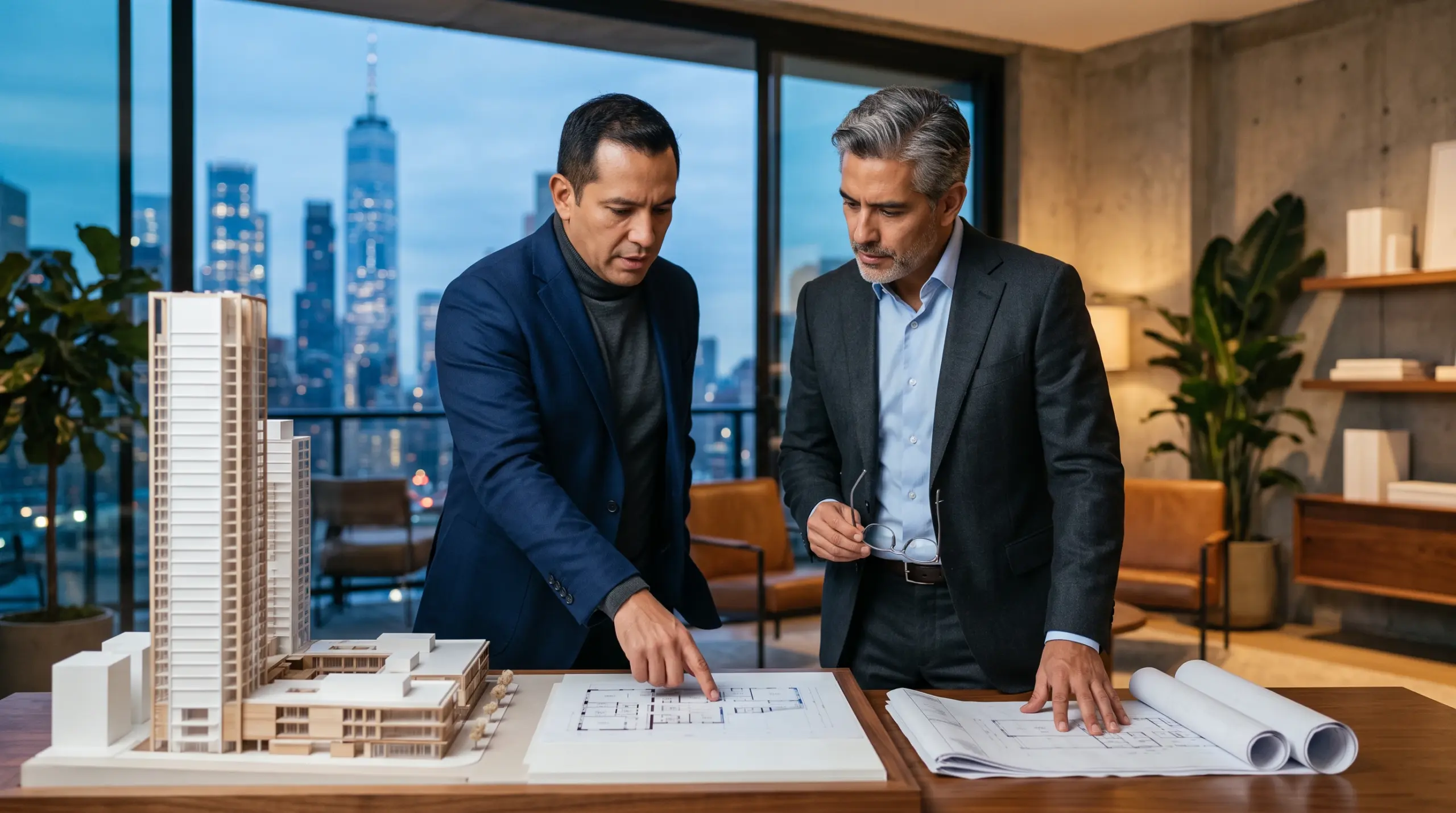
Copyright protection for architects and building designs begins automatically when an original architectural work is created and fixed in a tangible form, such as drawings, digital plans, renderings, specifications, or a completed building. However, ownership and proof are different problems. If a client, contractor, competitor, or former collaborator later claims that they created the design, an architect may need reliable evidence showing what was created, by whom, and when.
This article explains how architectural copyright works, what aspects of a building design may be protected, how contracts and collaboration affect ownership, and why a dated record can be valuable. You will also learn how notarized copyright evidence from Copyrightrecords.com can complement registration with the U.S. Copyright Office. It is an affordable way to document authorship, but it is not a substitute for federal registration or legal advice.
Copyright Protection for Architects and Building Designs: What the Law Covers
In the United States, copyright generally exists as soon as an original work is created and fixed in a tangible medium. For architects, that medium might be a sketchbook, CAD file, BIM model, technical drawing, site plan, rendering, presentation board, or physical structure. The Architectural Works Copyright Protection Act expanded federal copyright protection to qualifying architectural works, including the design of a building as expressed in architectural plans, drawings, or the building itself.
Architectural copyright can protect original creative choices involving elements such as spatial arrangement, overall form, composition, elevations, and the relationship between a building’s visual and structural components. Protection may apply to both two-dimensional drawings and certain three-dimensional architectural works. A design does not need to be revolutionary. It generally needs only a modest level of originality rather than copying another work.
Protection applies to expression, not every design idea
Copyright does not give an architect ownership of every idea, building type, construction technique, or functional solution used in a project. It does not protect facts, general concepts, procedures, systems, methods of operation, or features dictated entirely by function. Common architectural elements—such as standard doors, ordinary windows, basic staircases, or familiar floor-plan arrangements—may receive little or no protection by themselves.
Nevertheless, a larger combination of individually familiar elements may contain protectable original expression. The key question is often whether the overall design reflects creative authorship and whether the alleged copying concerns protected expression rather than an unprotected idea or functional necessity.
Different project materials may have different protection
A single project can contain several copyrightable works. For example, an architect may create:
- Concept sketches and preliminary studies
- Construction drawings and detail sheets
- Computer-aided design files and BIM models
- Photorealistic renderings and animations
- Written specifications and explanatory text
- Landscape, interior, or lighting concepts
These materials may have different authors, owners, delivery dates, and contractual restrictions. Keeping them organized helps establish exactly what was created and prevents confusion when a project changes over time.
Who Owns an Architectural Design?
The architect who creates an original design is usually the initial copyright owner, unless an agreement or applicable legal rule provides otherwise. That simple statement becomes more complicated when a firm, employee, client, consultant, or multiple architects participate in the work.
Employees, firms, and independent contractors
Work created by an employee within the scope of employment may be treated as a “work made for hire,” making the employer the copyright owner from the outset. The analysis can differ for independent contractors. A client does not automatically own every copyright merely because the client paid for architectural services. Ownership may depend on the written agreement, the nature of the work, and whether a valid work-made-for-hire arrangement applies.
Architectural firms should therefore use clear engagement letters and employment or contractor agreements. These documents can address copyright ownership, licenses, portfolio rights, revisions, attribution, payment conditions, and permitted reuse. A client might receive a license to use plans for one construction project without receiving unrestricted ownership of the underlying design.
Joint authorship and collaborative projects
When two or more people contribute original expression with the intention that their contributions form one integrated work, joint authorship may arise. That can create shared rights and obligations. Not every consultant or project participant is automatically a joint author; providing factual information, technical services, or ideas alone may not be enough.
Before work begins, identify who is contributing creative expression and how ownership will be handled. Maintain contribution records, meeting notes, file histories, and approvals. These records can become important if a dispute develops over who designed a particular feature or who had permission to use the plans.
Architects should also remember that copyright ownership and professional licensing are separate issues. A copyright agreement does not replace building-code compliance, professional-responsibility requirements, zoning approvals, or the rules of a licensing board.
Why Dated Evidence Matters in Architectural Copyright Disputes
Copyright is automatic, but proving authorship later can be difficult. Digital files can be edited, renamed, overwritten, or copied. A person who receives a PDF or rendering may later claim that they created it. Email chains may be incomplete, and cloud platforms may not provide a clear, independently verified record of the original work.
Strong documentation helps connect the creator to a specific version of a design at a specific time. It can support negotiations, clarify ownership, and give an attorney useful evidence to evaluate before sending a demand or pursuing a claim.
What a useful evidence record can include
An architect’s documentation system may include:
- The creator’s legal name and professional or business name
- The project title, address, client, and internal reference number
- A description of the design and the materials being documented
- Relevant drawings, renderings, plans, models, or file exports
- Creation dates, revision dates, and version numbers
- Contracts, assignment terms, licenses, and approval records
- Emails or transmittal records showing delivery to a client or consultant
It is wise to preserve the original working files as well as a stable copy of the version being claimed. Keep later revisions separately identified. A record that clearly distinguishes “Concept Set, Version 1” from “Issued for Construction, Version 4” is more useful than a folder containing files with ambiguous names.
How notarized copyright evidence can help
Copyrightrecords.com provides a certificate paired with notarization to create dated, witnessed evidence of a creator’s authorship claim. The service is designed to document what was presented at a particular point in time and to add an independent third party’s confirmation to the record. This can make the evidence harder to dismiss than an unsupported personal assertion or an ordinary file timestamp.
This is evidentiary protection, not legal registration. A certificate does not decide who legally owns a design, guarantee that every submitted element is copyrightable, or automatically prove infringement. It also does not provide permission to use someone else’s work. Its value is that it helps preserve a contemporaneous record that may support a later dispute, settlement discussion, or legal assessment.
Copyrightrecords.com operates as a church-based unincorporated association and offers this documentation service separately from the federal copyright system. The record is not a government record and should not be described as official registration. A notarized record can be one part of a broader evidence file that includes contracts, source files, communications, and professional records.
Notarized Evidence and U.S. Copyright Office Registration
Architects often ask whether a notarized certificate is enough to enforce their rights. The answer is no. Copyrightrecords.com’s certificate and notarization work alongside registration with the U.S. Copyright Office; they do not replace it.
Under 17 U.S.C. §411(a), a copyright owner generally must have a completed registration—or a refusal of registration—before filing a federal copyright infringement lawsuit. In Fourth Estate Public Benefit Corp. v. Wall-Street.com, the Supreme Court confirmed that registration must be completed before a lawsuit is filed in the ordinary case. A private certificate does not change that requirement.
Why timing still matters
Registration timing can also affect access to statutory damages and attorney’s fees. These remedies are generally connected to registration before infringement begins or within the applicable statutory period after first publication. A notarized record does not create eligibility for those remedies.
For that reason, architects should consider federal registration for important works, particularly before publicly releasing designs or when a project has substantial commercial value. Registration strategies can be complicated when a design has multiple versions, unpublished materials, or several authors, so professional legal advice may be appropriate.
A practical two-part protection strategy
A sensible approach may combine:
- Ongoing evidence preservation: Maintain organized source files, agreements, version histories, delivery records, and, where useful, notarized copyright evidence.
- Federal registration: Register qualifying works with the U.S. Copyright Office when the design’s value, publication status, or infringement risk justifies it.
This layered approach addresses two separate needs: documenting what happened and satisfying the legal requirements for enforcement. Neither step eliminates the importance of clear contracts or careful project administration.
Practical Steps for Protecting Architectural Designs
Architects and design firms can reduce uncertainty by building copyright protection into their normal workflow. Begin by identifying the creator and owner of every major deliverable. Then define how the client, firm, employees, consultants, and contractors may use the work.
Use written agreements that explain whether the client receives an assignment, an exclusive license, or a limited project-specific license. Address what happens if the project is canceled, if fees are unpaid, or if another architect is asked to modify the plans. Include terms covering portfolio display, attribution, reuse of standard details, and responsibility for unauthorized alterations.
Next, preserve evidence at meaningful milestones. Document the initial concept, design development, permit submission, issued drawings, and major revisions. A notarized copyright certificate may be especially useful for an important concept package, signature design, competition submission, or completed body of work.
Finally, respond carefully if suspected copying occurs. Save screenshots, downloads, advertisements, construction photographs, and communications. Do not destroy or alter the original evidence. Avoid making admissions or sending aggressive accusations without understanding the facts. A copyright attorney can evaluate substantial similarity, ownership, defenses, registration status, and possible remedies.
Conclusion: Build a Stronger Record for Your Architectural Work
Architectural copyright protection can help preserve the creative value of plans, renderings, drawings, models, and building designs. Copyright exists automatically when an original work is created and fixed, but proving when it was created and who authored it may be challenging later.
Clear contracts, organized project files, version histories, and timely U.S. Copyright Office registration each serve a different purpose. A Copyrightrecords.com certificate with notarization adds dated, witnessed evidence of authorship at an affordable cost, but it is not official registration and does not by itself provide the right to file a federal infringement lawsuit or obtain statutory damages.
For architects seeking practical building design protection, the strongest approach is layered: create original work, document it carefully, define ownership in writing, preserve notarized copyright evidence where appropriate, and consult a qualified attorney about federal registration and enforcement.