

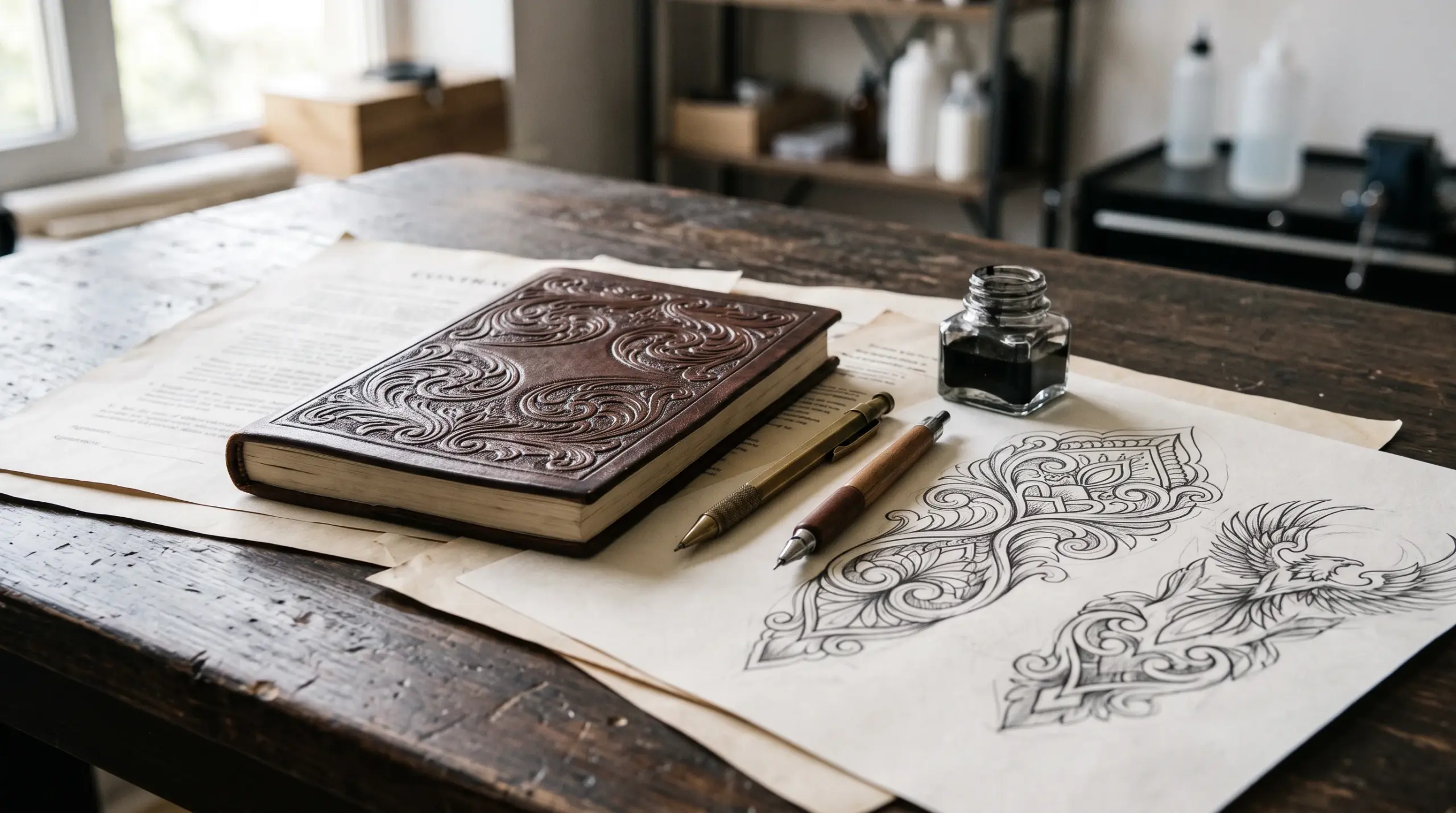
Copyright protection for tattoo artists begins with understanding the difference between owning an original design and proving that ownership later. A tattoo artist may create a distinctive illustration, lettering composition, ornamental pattern, or custom character for a client, only to discover that the design has been copied, reposted, sold as merchandise, or reproduced in a video game without permission. The practical question is not simply, “Do I own this?” It is also, “Can I show when I created it, what I created, and how the disputed version came from my work?”
This guide explains tattoo intellectual property, custom tattoo design ownership, originality, client agreements, evidence preservation, and the limits of copyright documentation. It also explains why a dated certificate and notarization can support a tattoo artist’s evidence without replacing registration with the U.S. Copyright Office.
Copyright Protection for Tattoo Artists: What Copyright Actually Covers
In the United States, copyright protection generally exists automatically when a human creator makes an original work and fixes it in a tangible form. The U.S. Copyright Office’s explanation of copyright describes originality as independent creation with at least a minimal degree of creativity, while fixation means the work is captured in a sufficiently permanent form.
For tattoo artists, the protectable work is usually the artistic design—not the general idea of “a rose,” “a skull,” “a dragon,” or “a traditional eagle.” Copyright protects creative expression, such as the artist’s particular line work, composition, shading, proportions, arrangement, and original combination of elements. It does not protect an idea, procedure, technique, tattooing method, or broad artistic concept.
A tattoo artist may have several potentially relevant works:
- The initial pencil sketch or drawing.
- A digital illustration or layered design file.
- A stencil prepared for transfer.
- A flash sheet containing original designs.
- Photographs documenting the finished tattoo.
- Promotional images, artwork descriptions, and portfolio presentations.
The design’s copyright and the client’s rights in the physical tattoo are not necessarily the same thing. A client may pay for a tattoo and receive permission to wear and display it. That transaction does not automatically mean the artist transferred every copyright interest, including the right to reproduce the design on merchandise, license it to a brand, or authorize another artist to recreate it.
Originality Is Essential
Proving tattoo originality requires more than showing that an artist was the person who applied the ink. The artist should be able to demonstrate independent creation and identify the specific creative choices that make the work distinctive. A design copied from another artist, a recognizable third-party character, or a client-supplied image may create ownership and infringement problems of its own.
The safest practice is to preserve the earliest version of the artist’s own work and record how the design developed. Avoid describing every tattoo as “fully original” if it incorporates preexisting artwork, licensed material, public-domain imagery, or a client’s reference image. Copyright in a new arrangement may extend only to the artist’s original contributions, not to material someone else already owns.
Custom Tattoo Design Ownership: Artist, Client, or Both?
Custom tattoo design ownership often becomes unclear because tattoo appointments are handled informally. A client may send reference images, approve a sketch, pay a deposit, and assume that payment gives them unlimited rights. The artist may assume the opposite: that the client bought the tattooing service while the artist retained copyright in the underlying artwork.
Copyright ownership depends on the facts, including who created the artwork, whether the artist was an employee or independent contractor, and what the parties agreed in writing. The Copyright Office explains that ownership can be affected by assignments, certain work-made-for-hire arrangements, and other contractual transfers.
Use Written Terms Before the Appointment
A short written agreement can prevent many disputes. It should state, in plain language:
- Who owns the copyright in the sketch, stencil, and final design.
- What the client is allowed to do with the finished tattoo.
- Whether the client may reproduce the design on clothing, prints, products, or advertising.
- Whether the artist may photograph, display, and promote the tattoo.
- Whether the artist may reuse general elements or create a similar design for another client.
- Whether the design may be modified, transferred, licensed, or resold.
For example, an artist might grant the client a personal, nonexclusive license to wear and display the tattoo while retaining ownership of the underlying artwork. Another artist may choose to assign broader rights for a higher fee. Neither approach is automatically correct; the important point is that the agreement should match the business deal.
Do not assume that a client’s payment automatically transfers copyright. Likewise, do not assume that an artist can freely commercialize a tattoo if the written agreement grants the client exclusive rights. Clear terms are especially important when the client is a public figure, influencer, athlete, musician, or business whose tattoo may appear in extensive commercial media.
Proving Tattoo Originality with a Strong Evidence Trail
When a design is challenged, evidence should tell a chronological story. A finished social-media post may show that an artist displayed the work, but it may not establish when the underlying design was created or whether the artist copied an earlier source. Stronger documentation connects the artist, the design, and the creation date.
What to Preserve
Maintain an organized record for each significant custom design or flash collection. Useful materials may include:
- Original sketches, including photographed paper drawings.
- Digital source files with creation history and revision dates.
- Time-lapse videos or screen recordings of the design process.
- Messages showing the client’s request and the artist’s creative response.
- Reference images, with notes identifying which elements were supplied by the client.
- Invoices, deposits, contracts, and approval messages.
- Photographs of the stencil and completed tattoo.
- Portfolio posts showing the design’s first public appearance.
- Records identifying the artist, client, date, and project name.
Keep the original files in a stable archive rather than relying only on a social-media platform. Platforms can change dates, remove posts, compress images, or delete accounts. Preserve metadata where possible, but remember that metadata alone is not always conclusive because digital files can be altered.
Why a Dated, Witnessed Record Helps
Copyright exists automatically when an original work is created and fixed. The difficult issue in a dispute is often proving when the work existed and that the creator made the authorship claim before the alleged copying occurred.
Copyrightrecords.com provides a $17 copyright certificate paired with notarization. Properly understood, this creates dated, witnessed evidence of the artist’s claim and the work submitted at a particular time. Notarization adds an independent third party’s confirmation to the record, making it more difficult to dismiss than an unsupported assertion about when a file was created.
This is evidentiary protection, not official registration. It does not make the service the U.S. Copyright Office, and it does not create a right to file a federal lawsuit. It works alongside other evidence and, where appropriate, federal registration.
Artists should also avoid relying on the old “poor man’s copyright” idea of mailing a sealed envelope to themselves. A postmark may show that an envelope was mailed, but it does not automatically authenticate the contents, prove authorship, or provide the same type of third-party witnessing as a properly notarized record. A notarized documentation service is not a substitute for registration, but it can provide a more deliberate authorship record than an informal mailing tactic.
Registration, Lawsuits, and Real-World Tattoo Disputes
Automatic copyright ownership and federal enforcement are different issues. The U.S. Copyright Office’s copyright FAQ explains that registration is generally voluntary for protection to exist, but registration is required before the owner of a U.S. work can bring an infringement lawsuit in federal court.
That requirement was confirmed by the Supreme Court in Fourth Estate Public Benefit Corp. v. Wall-Street.com, LLC, decided March 4, 2019. The Court held that a copyright claimant generally must have an issued registration—or a refusal from the Copyright Office—before filing an infringement action. The Supreme Court’s Fourth Estate opinion is the controlling primary source.
Registration can also matter for remedies. Statutory damages and attorney’s fees are tied to timely registration under the Copyright Act, not merely to a private certificate, notarization, timestamp, or portfolio post. Therefore, tattoo artists should consider federal registration for commercially important designs, especially before infringement occurs or soon after publication.
Recent disputes show why tattoo copyright questions can be fact-specific. In 2023, an Associated Press report described a jury verdict finding that tattoo artist Kat Von D did not infringe photographer Jeffrey Sedlik’s copyright by creating a Miles Davis tattoo from the disputed photograph. The Associated Press coverage of the Kat Von D case illustrates that tattoo litigation may involve substantial-similarity analysis, fair use, reference photographs, and the difference between copying a protected photograph and creating a new artistic work.
The lesson is not that every tattoo is protected or that every reference image is safe. The lesson is that ownership, originality, permission, substantial similarity, and fair use must be analyzed from the actual evidence. A dated record can help establish the artist’s timeline, but it cannot cure unauthorized copying of someone else’s work.
Practical Copyright Protection for Tattoo Artists
A useful protection plan combines creative documentation, written agreements, and the correct legal filing when the stakes justify it.
- Create and save the design before the appointment.
- Keep layered source files and dated drafts.
- Separate client references from the artist’s original contributions.
- Use written terms covering copyright and permitted uses.
- Photograph the stencil and finished tattoo with project records.
- Document important designs with a dated certificate and notarization.
- Consider U.S. Copyright Office registration for valuable or commercially exploited work.
- Monitor websites, social media, merchandise, and games for unauthorized reproductions.
- Consult a qualified intellectual-property attorney before sending a demand or filing a claim.
If another business copies a tattoo design, begin by preserving the evidence. Capture dated screenshots, save product pages, record URLs, download available files, and compare the disputed work with the earliest documented version. Do not edit or overwrite the original evidence. For a serious dispute, legal advice is important because a demand letter, licensing negotiation, takedown request, or lawsuit can have different consequences.
Conclusion: Build Proof Before a Tattoo Copyright Dispute
Copyright for tattoo artists is not just about claiming ownership after a design becomes popular. It is about creating a reliable record before questions arise. Original sketches, source files, contracts, client communications, photographs, and dated documentation can help show who created the design and when.
Copyright protection begins automatically when an original work is created and fixed, but proving authorship later can be difficult. A Copyrightrecords.com certificate and notarization provides dated, witnessed evidence that works alongside an artist’s broader documentation. It is not official U.S. Copyright Office registration, and it does not replace the registration required to bring a federal infringement lawsuit or pursue certain statutory remedies.
For tattoo artists, the strongest approach is practical: create independently, document the process, define custom tattoo design ownership in writing, preserve evidence, and register important work when appropriate.









