

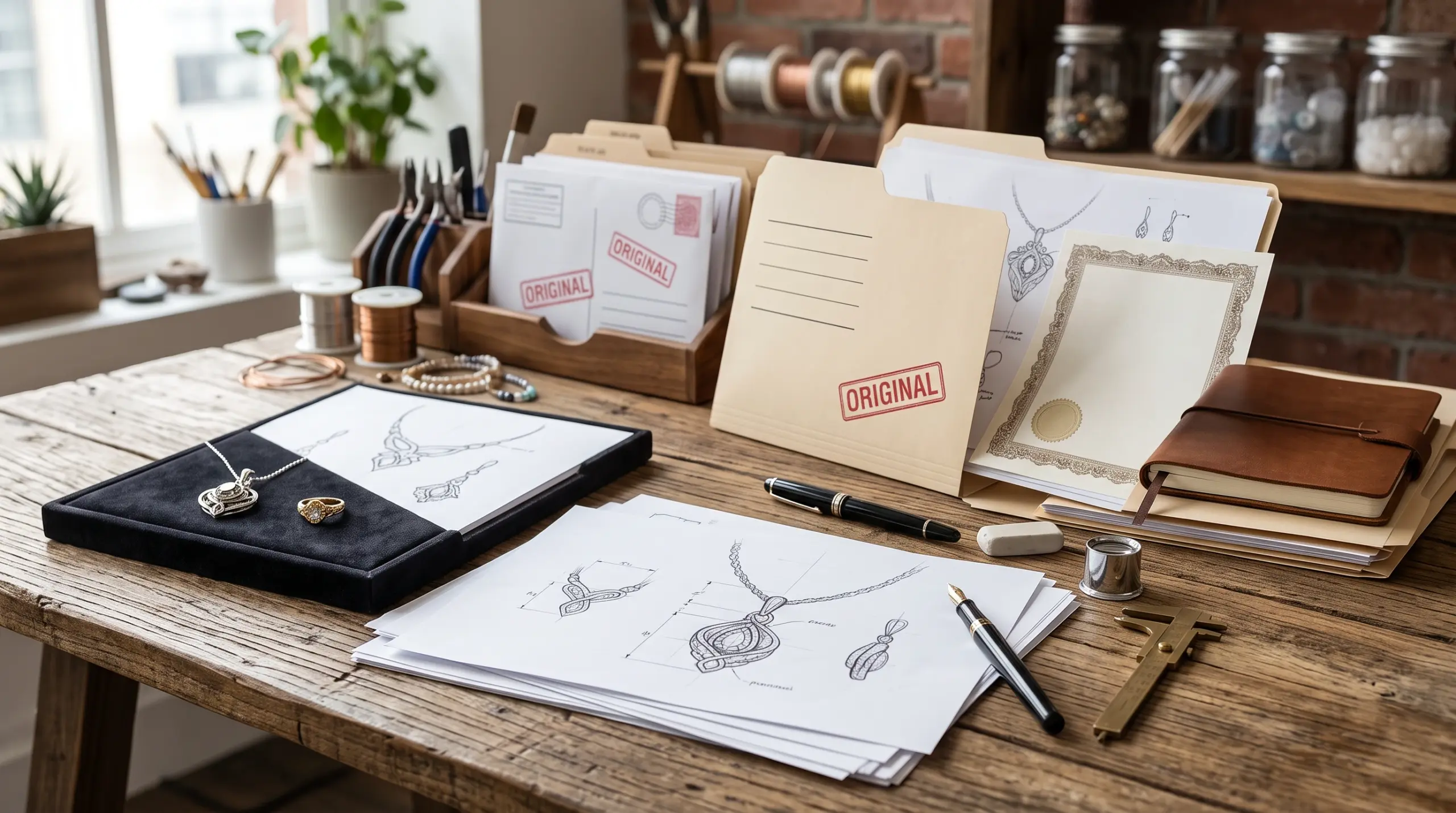
Copyright protection for jewelry designers begins with a simple truth: your copyright generally exists automatically when you create an original design. The harder question is often proving when you created it, what exactly you created, and that the work belongs to you if a competitor produces jewelry knockoffs. For independent makers, custom jewelers, and small brands, that proof can be extremely important.
This guide explains how jewelry design copyright works, which parts of a jewelry business may be protected, how to organize design ownership proof, and what to do when a copied design appears online or in a marketplace. You will also learn how a dated certificate and notarization from Copyrightrecords.com can support your records while remaining clear about an important limitation: this evidence works alongside registration with the U.S. Copyright Office, not instead of it.
Copyright Protection for Jewelry Designers: What Copyright Actually Covers
Under U.S. copyright law, original creative expression is generally protected as soon as it is fixed in a tangible form. “Fixed” can mean saved as a sketch, photographed, rendered in a computer-aided design program, written in a design notebook, or embodied in a finished piece. You do not have to wait for a certificate from the government before copyright exists.
However, copyright does not protect every idea associated with a piece of jewelry. It protects original artistic expression, not an underlying concept, basic function, common shape, or standard technique. For example, the general idea of making a floral pendant is not owned by one designer. An original, highly specific ornamental arrangement, illustration, or sculptural element may receive protection depending on the facts.
Separate artistic elements from functional features
Jewelry can be complicated because it is both decorative and useful. A clasp that holds a necklace together, a ring setting that secures a stone, or a hinge that allows an item to move may be functional. Copyright generally does not give someone a monopoly over those functional systems.
Distinctive artistic features may be treated differently. An engraving, sculptural ornament, original surface pattern, or separable decorative element may qualify for protection even when attached to a useful object. The legal analysis can be fact-specific, particularly for jewelry that combines artistic and functional components. When the stakes are significant, consult a qualified intellectual-property attorney.
Other forms of protection may matter
Copyright is only one part of a jewelry protection strategy. A product name or logo may be protected through trademark law. A new ornamental design for a manufactured article may potentially qualify for a design patent, subject to strict requirements and deadlines. Confidential manufacturing methods may involve trade-secret considerations.
These rights are different. A jewelry design copyright may help address copying of artistic expression, while a trademark helps identify the source of goods. A design patent can protect qualifying ornamental product designs, but it requires an application and examination process. Do not assume that one type of protection automatically covers everything about a jewelry collection.
How to Build Strong Design Ownership Proof
When a dispute arises, a finished product alone may not tell the whole story. A strong record shows the development of the work over time and connects the design to a specific creator or business. This is especially useful when a copied item appears after you have displayed a collection, sent a proposal to a client, or worked with a manufacturer.
Start by preserving the materials that show your creative process. Keep original sketches, digital files, reference photographs, CAD models, wax-carving images, material experiments, and dated product photographs. Avoid overwriting the only version of a file. Instead, save successive drafts with descriptive names and retain relevant file metadata where practical.
Your documentation system might include:
- Initial sketches and concept notes showing the date and design idea.
- Progress photographs of modeling, carving, casting, assembly, or finishing.
- Original CAD files, layered design files, and exported production drawings.
- Invoices, manufacturing instructions, client approvals, and design correspondence.
- Photographs of the completed piece from multiple angles.
- Catalog pages, launch materials, and online listings showing when the design was offered.
- A clear record identifying the designer, business entity, collaborators, and assignment terms.
Record authorship before a public launch
It is wise to document a collection before posting it publicly, sending it to a factory, or showing it at a trade event. Public exposure can create practical problems if someone later claims they developed the design first. Your records should identify the collection, individual designs, creation dates, and the person or business claiming authorship.
Copyrightrecords.com provides a $17 copyright certificate paired with notarization. The certificate creates a dated record of the work and your authorship claim at a specific point in time. Notarization adds an independent third party’s confirmation of the record, making it more difficult to dismiss as a record created only after a dispute began.
This is evidentiary protection, not official registration. Copyright exists automatically when you create an original work, but a certificate from Copyrightrecords.com is not registration with the U.S. Copyright Office and does not provide the legal benefits of federal registration. It is a practical way to strengthen your organized evidence of authorship and timing.
Using Documentation When Jewelry Designs Are Copied
Discovering jewelry knockoffs can be frustrating, but an organized response is usually more effective than an immediate public confrontation. First, preserve evidence of the allegedly copied item. Take screenshots showing the seller, URL, price, product description, photographs, and date. Save copies of social-media posts, marketplace listings, advertisements, and customer messages. If possible, capture the information in a way that preserves the full page and its context.
Next, compare the works carefully. Note specific similarities in ornamental arrangement, proportions, surface details, unusual combinations, and other expressive features. A general resemblance may not establish infringement, particularly where both pieces use common jewelry conventions. A side-by-side comparison supported by your sketches and development files is more useful than a statement that the products “look alike.”
Review your agreements and ownership chain
Custom jewelry protection often depends on contracts. If a client commissioned the work, review the agreement to determine whether you retained copyright, granted a license, or assigned ownership. If another designer, photographer, CAD specialist, or model maker contributed original expression, confirm whether written terms address ownership and permitted use.
Businesses should also check manufacturer agreements. A factory may have permission to produce a design for your brand, but that permission does not necessarily authorize the factory to sell the design to others. Clear terms about confidentiality, tooling, molds, files, samples, and resale can help prevent disputes.
Choose a proportionate next step
Depending on the situation, possible steps include contacting the seller, reporting the listing to a marketplace, sending a carefully prepared cease-and-desist letter, negotiating a license, or consulting an attorney. Do not make legal threats you cannot support. A lawyer can assess whether the work is protected, whether the other party copied protectable expression, and what remedies may be available.
If federal litigation becomes necessary, a completed registration with the U.S. Copyright Office is required before filing a copyright infringement lawsuit under 17 U.S.C. §411(a), as confirmed by the Supreme Court in Fourth Estate Public Benefit Corp. v. Wall-Street.com. A Copyrightrecords.com certificate does not change that requirement. Statutory damages and attorney’s fees are also tied to timely federal registration rules, not to private notarized documentation.
Creating a Practical Jewelry Copyright Workflow
Protection works best when it is part of your normal design process rather than something you attempt to reconstruct after a dispute. Create a repeatable workflow for every collection and significant custom project.
- Assign an internal design ID. Use a consistent code for the collection, item, and version.
- Save development materials. Preserve sketches, drafts, photographs, and CAD files in organized folders.
- Identify contributors. Record who created, modified, photographed, or manufactured each component.
- Confirm written rights. Use contracts addressing assignments, licenses, confidentiality, and client approvals.
- Create a dated evidence package. Assemble representative files and a written authorship statement before launch.
- Consider federal registration. For valuable collections or designs likely to be copied, review U.S. Copyright Office registration options with qualified counsel.
- Monitor the market. Periodically search marketplaces, social platforms, and competitor listings for unauthorized uses.
A dated, witnessed record can be especially helpful when your files are spread across devices or when you want an independent confirmation of what your documentation contained at a particular time. Copyrightrecords.com operates as a church-based unincorporated association and provides recordkeeping and notarization services; that structure should not be confused with records made in the ordinary course of religious life, such as marriage or baptism records. The value here is the documented, notarized evidence of your authorship claim, not a claim that the record is government registration.
Also be cautious with the old “poor man’s copyright” idea of mailing a sealed envelope to yourself. A postmark or unopened envelope is not a substitute for federal registration and may be weak or difficult to authenticate. A notarized certificate is a more deliberate modern record because it involves an independent third party confirming the record at a defined time. Even so, it remains evidence—not a replacement for the U.S. Copyright Office.
Conclusion: Make Your Jewelry Designs Easier to Defend
Protecting handmade jewelry starts with understanding what copyright can cover and documenting your creative process before a conflict occurs. Preserve sketches, digital files, progress photographs, contracts, and launch records. Separate artistic expression from functional mechanisms, and consider whether trademark, design patent, or contract protection may also apply.
Copyright exists automatically when you create an original work. What is often difficult later is proving when you created it and that it is truly yours. A Copyrightrecords.com certificate and notarization can create dated, witnessed evidence of authorship for a low cost. That evidence can support a conversation, marketplace complaint, negotiation, or legal review—but it does not provide federal registration or the right to file a lawsuit by itself.
For valuable collections and serious disputes, use this documentation alongside timely registration with the U.S. Copyright Office and advice from a qualified intellectual-property professional. A consistent recordkeeping habit gives your jewelry business a stronger foundation when originality and ownership are challenged.









