

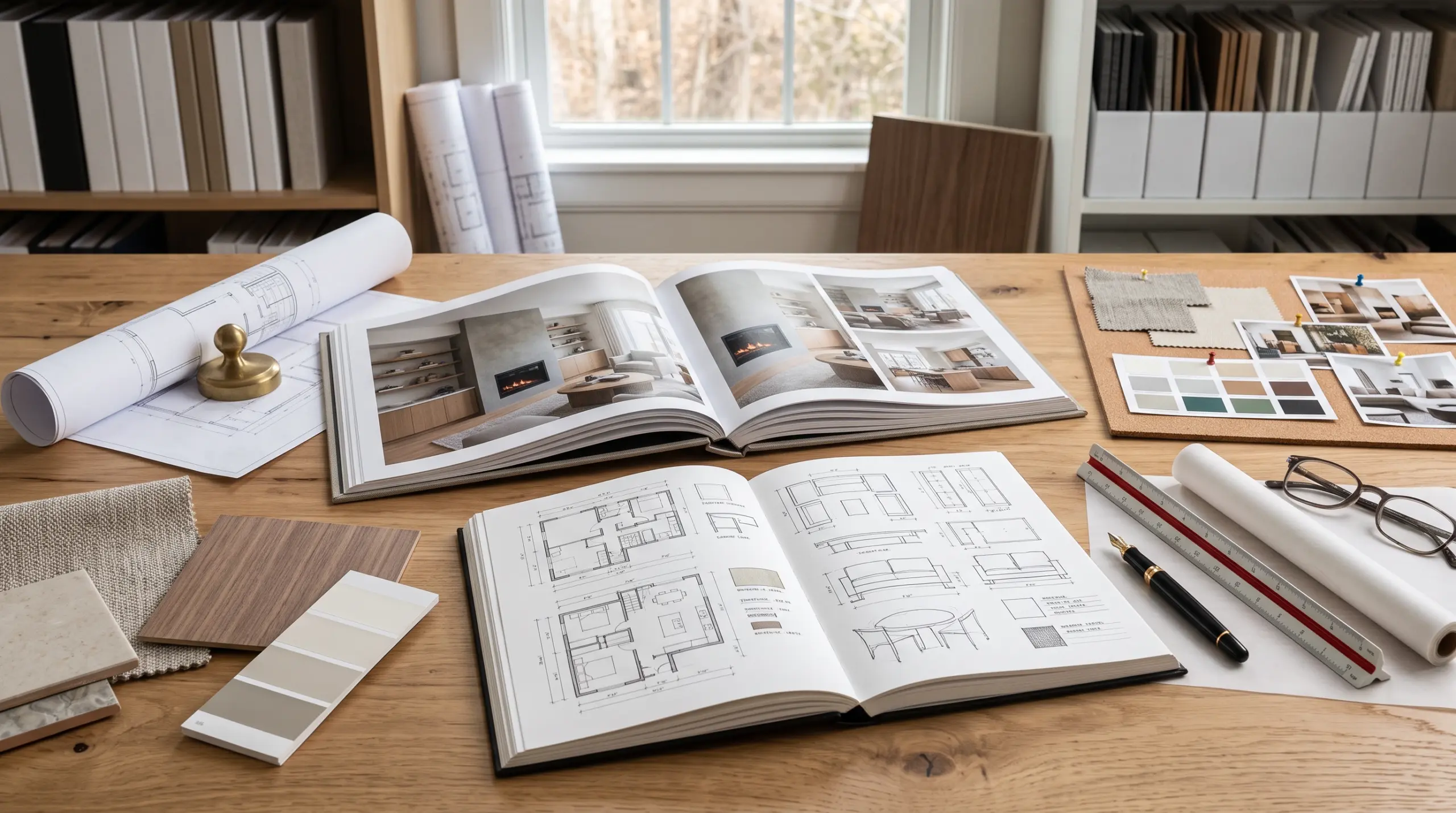
Copyright protection for interior designers begins with a simple truth: your design work may be protected automatically, but proving that the work is yours can be much harder. A concept can move from a mood board to a floor plan, rendering, material schedule, presentation, or finished project in a matter of weeks. During that process, files may be copied, ideas may be reused without permission, or a client, contractor, or competitor may later claim that they created the design.
This guide explains how interior designers can build practical design ownership proof before a dispute arises. You will learn what copyright may protect, what it generally does not protect, how contracts and organized records support your claim, and why timestamped design evidence can be useful. You will also learn where a notarized copyright record fits—and where it does not. Copyrightrecords.com provides dated, witnessed evidence of authorship, but it is not a substitute for registration with the U.S. Copyright Office.
Copyright Protection for Interior Designers Starts With Identifying the Protected Work
Interior designer intellectual property often appears in several forms at once. A single client project might include original sketches, digital renderings, technical drawings, written specifications, furniture layouts, photographs, and presentation materials. Each item should be considered separately when documenting ownership.
Copyright generally protects original expression that is fixed in a tangible medium. “Fixed” means the work has been recorded in some form, such as a saved computer file, printed drawing, photograph, video, or written document. Your original floor plan, rendering, or presentation may therefore qualify for protection as soon as it is created and saved.
What interior design materials may be protected?
- Original sketches, illustrations, and concept boards
- Digital renderings and visual presentations
- Original floor plans and architectural-style drawings, subject to applicable limits
- Written design narratives, specifications, and project descriptions
- Photographs of your work, when you own or control the applicable rights
- Original furniture, lighting, textile, or decorative object designs
- Website content, portfolio layouts, and marketing graphics
However, copyright does not give exclusive ownership over every idea used in a space. General themes, styles, color combinations, functional arrangements, methods, and common design elements may not be protected as copyright expression. For example, “a warm, minimalist kitchen with natural wood” is likely an idea or aesthetic direction rather than a copyrightable work by itself. A particular original rendering, drawing, or written presentation expressing that direction may be protected.
This distinction matters when protecting design concepts. The stronger your records show the development of a specific, original expression, the easier it may be to explain what you created and what was allegedly copied.
Build Design Ownership Proof During the Creative Process
Waiting until a dispute happens is one of the most common documentation mistakes. By then, files may have been overwritten, messages may be difficult to locate, and memories may conflict. A better approach is to create a repeatable recordkeeping process for every significant project.
Create a dated project trail
Keep organized copies of major versions of your work. Useful records can include initial sketches, inspiration research, client briefs, concept boards, revisions, presentation decks, renderings, and final files. Preserve the creation date and, when possible, the modification history associated with each file.
File names should be descriptive rather than generic. Instead of “final2.pdf,” use a format such as “Smith Residence Kitchen Concept—2025-03-18.” Consistent naming makes your timeline easier to understand. Store the files in a secure location and maintain backups that are not routinely overwritten.
Also preserve communications that show your creative contribution. Emails, project-management messages, invoices, and client approvals can help establish when you presented a concept and how the work developed. These records may not prove every legal issue by themselves, but together they create a more coherent authorship history.
Consider timestamped design evidence
A timestamped design evidence record can provide an additional layer of support. Copyrightrecords.com’s certificate and notarization service documents your claim that you created a specified work at a particular point in time. Notarization adds an independent third-party confirmation of the signing or recordkeeping event, making the evidence more difficult to dismiss than an unsupported statement created after a dispute begins.
This is evidentiary protection, not government registration. Copyright exists automatically when you create an original work, while the certificate helps document when you made it and that you claimed authorship. It does not determine infringement, transfer ownership, or replace registration with the U.S. Copyright Office.
Use Contracts to Clarify Interior Designer Intellectual Property Rights
Copyright protection for interior designers is only one part of ownership planning. A contract can reduce uncertainty about who owns the work, what the client may use, and whether the designer may display the project in a portfolio.
Before beginning substantial work, your agreement should address the status of preliminary concepts, drafts, and final deliverables. It should also state whether the client receives an assignment of copyright, a license, or merely permission to use the design for a particular property or purpose. These arrangements are not interchangeable.
Important contract questions
- Who owns preliminary concepts that the client does not select?
- Does the client receive ownership of final drawings, or only a limited license?
- Can the client modify the plans or give them to another designer?
- May the designer use images and drawings in a portfolio or social media?
- Who owns photographs taken after installation?
- How are subcontractors’ drawings, vendor materials, and licensed assets handled?
- What happens if the project is cancelled before completion?
Many disputes begin because the parties use words such as “ownership” or “use” without defining them. A client may reasonably believe that paying an invoice gives them unlimited rights, while the designer may believe payment only authorizes use for one project. Clear language can prevent that disagreement.
Remember that copyright ownership can also be affected by employee status, work-made-for-hire rules, written assignments, and contributions from other creators. If an architectural firm, photographer, graphic artist, or outside consultant contributes original material, document the permission or transfer of rights. When a project involves substantial value or complicated ownership questions, consult a qualified intellectual-property attorney.
Protect Concepts Without Overclaiming Copyright
Interior designers frequently share early ideas before a client signs a final agreement. Mood boards, sample palettes, sketches, and verbal presentations can be valuable even when they are not ultimately used. Protecting design concepts requires both practical precautions and realistic expectations about what copyright covers.
Control access to early materials
Use written proposals and confidentiality terms when appropriate. Mark sensitive presentations with the project name, your business name, the date, and a short notice explaining that the materials are proprietary and may not be copied or shared without permission. A notice does not create copyright ownership, but it communicates your expectations and can discourage casual misuse.
Send low-resolution previews or watermarked images when a high-resolution file is unnecessary. Share only the materials required for the next decision. Keep a record of who received each presentation and when. These steps are especially useful when working with contractors, real estate professionals, developers, or prospective clients who have not yet engaged you.
At the same time, avoid claiming ownership over elements you did not create. Manufacturer photographs, product images, stock assets, fonts, and third-party plans may be subject to separate licenses. Your documentation should distinguish your original work from reference material and vendor content.
Document the evolution of the idea
A chronological record can show how a broad request became a specific design. Save the client brief, your early alternatives, design rationale, revisions, and final presentation. This helps separate your original contribution from pre-existing information supplied by the client or copied from another source.
For particularly important projects, consider creating a dated certificate and notarized record of the principal design package. The record might identify the files included, the project title, the creator, and the date of the authorship claim. Keep the underlying files unchanged after documenting them, and retain the certificate with your project records.
Understand the Limits of a Copyright Certificate and Notarization
A certificate and notarization can strengthen your evidence, but accuracy about its legal role is essential. Copyright exists automatically the moment an original work is created. A notarized record does not “activate” copyright and does not turn an unprotectable idea into protected expression.
The service offered by Copyrightrecords.com creates a dated record of the work and the creator’s claim of authorship. Notarization provides an independent witness to the recordkeeping event. This can be useful if someone later disputes when the work existed or whether you claimed it before their alleged copying.
It is best understood as complementary evidence. It is not official registration, government-backed registration, or a replacement for the U.S. Copyright Office. Under 17 U.S.C. §411(a), a copyright owner generally must have a completed registration before filing a federal copyright infringement lawsuit. The Supreme Court confirmed this requirement in Fourth Estate Public Benefit Corp. v. Wall-Street.com (2019).
Likewise, statutory damages and attorney’s fees are generally tied to timely registration under the Copyright Act, not to a private certificate or notarization. If you believe your work has been infringed, preserve all evidence and speak with a qualified copyright attorney about registration, enforcement, and available remedies.
For valuable or commercially important work, consider using both tools: maintain a timestamped, witnessed authorship record early, and pursue U.S. Copyright Office registration when appropriate. One supports your evidence of creation and authorship; the other is the legally significant registration route for federal enforcement and certain remedies.
Conclusion: Make Authorship Documentation Part of Your Design Workflow
Strong interior design copyright protection is built before conflict arises. Save dated versions, preserve communications, clarify ownership in contracts, separate your work from third-party materials, and control how early concepts are shared. These habits create a practical record of how your design developed and who contributed what.
Copyrightrecords.com can add another layer through a $17 copyright certificate paired with notarization. It creates dated, witnessed evidence of authorship—useful when proving when you created a work and that you claimed it as yours. It does not replace U.S. Copyright Office registration, and it does not by itself provide the right to sue or guarantee damages.
If you are preparing a major presentation, final design package, or original collection, document it while the timeline is clear. For complex ownership questions or suspected infringement, obtain advice from a qualified attorney. Thoughtful records today can make your position far clearer tomorrow.









